Making connections is the outcome I strive for in everything I do. Even as a textile artist and teacher. Yarn can connect us to a concept. Yarn can connect us to one another. Yarn can connect us to the wider world. This “common thread” can be powerful. Here is where I will share all the ways in which I use yarn to connect. Even if you don’t knit or crochet, I hope you will find you can connect with yarn as well.
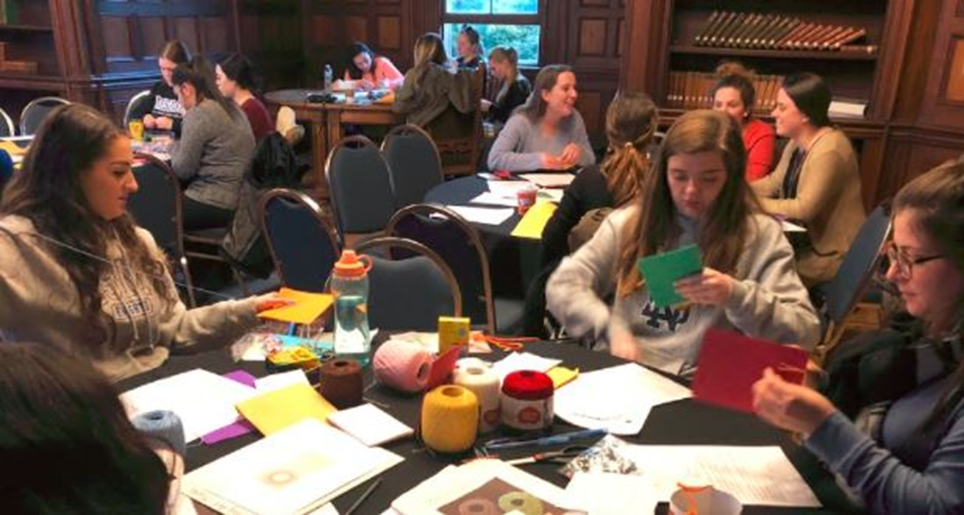
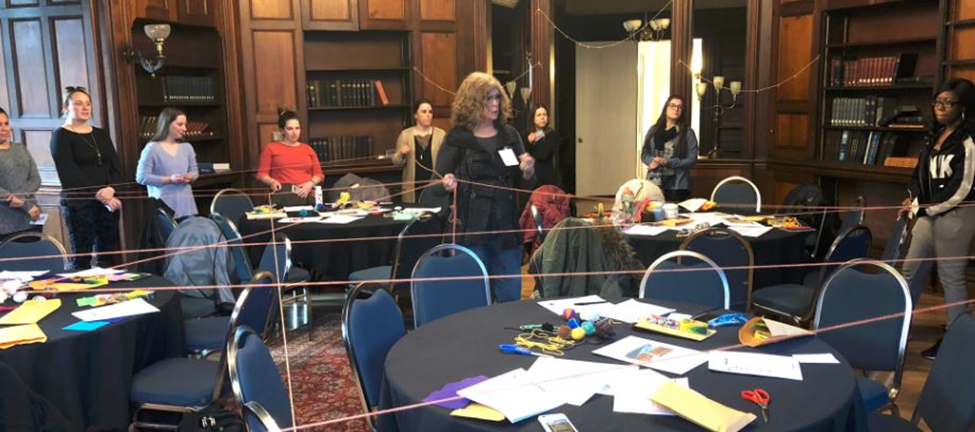
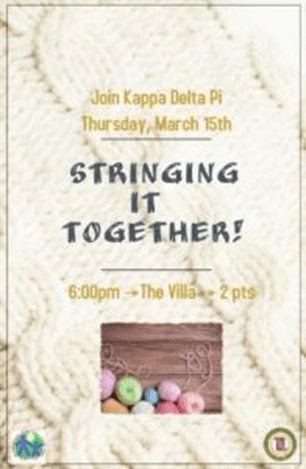
Recently I ran my third annual Stringing it Together workshop for educators in which we use yarn as a part of a multi-sensory approach to reading and math. Sometimes you need to return to the concrete nature of learning before you can help students reach the more abstract level. Our soon-to-be teachers enjoyed the connections they made to yarn and to one another.
Multi-sensory lessons help connect kids to concepts. Here’s a brief rundown on the process:
Our senses have two primary jobs
- To take in information from the outside world “the external sensory system”
- To organize external sensory information within our own bodies “internal sensory system”
Effective multi-sensory instruction:
- Engages children in learning through their senses externally and internally.
- Presents strategies that help children use one or a combination of their senses.
- Addresses the internal needs of children, thus preparing them to learn.
- Respects and embraces the need for children to feel safe in taking risks and to feel successful in the classroom.
When planning a multi-sensory lesson, we should consider 3 important elements:
- Body focus
- Sense Engagement
- Mind Connection
It means that students are paying attention and actively using their external senses of seeing, hearing, touching and moving. So, think about your senses as you plan. How can you keep the children involved? You can add movements to a song or get a story acted out. Keeping students physically involved will help keep them focused for longer periods of time.
We used string and yarn in our workshop in the following ways:
- Spaghetti Spelling
- Sticky Sight Words
- Bead Slides (phonemic awareness)
- Reading Response Art
- String Art (math operations & geometry)
- Sequencing Cards
- Food Chains
You can find a sample of a string art activity for math here